ORDER ARTICLE PERMISSIONS/REPRINTS/OFFPRINTS
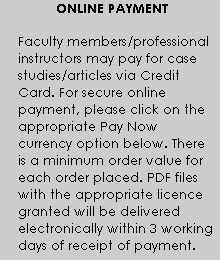
To order copies, and/or permissions to include this article in textbooks, edited volumes, course booklets, online/digital course packs, etc., and/or to order multiple individual hard copies for classroom use, please use the secure online payment, or the appropriate form available on the Order Forms page, or alternatively, contact the Publishing Editor, Peter Neilson, pneilson@neilsonjournals.com directly.
The Effective Teaching of Ethics at SAICA-Accredited Universities: A Systematic Review
Monique Weststrate and Anneke Maré Moolman
School of Accounting Sciences, North-West University, South Africa
Volume 23: 2026 pp. 00-00: ABSTRACT
South Africa has faced numerous corporate scandals while Chartered Accountants (South
Africa) (CAs(SA)) held executive positions, necessitating an improvement in the ethical behaviour
of future accountants. The South African Institute of Chartered Accountants (SAICA) developed a
new competency framework for the Chartered Accountant of the Future, with one category
specifically focusing on ethics, values and attitudes. SAICA-accredited universities (SAUs) are
urged to deliberately incorporate ethics into their accountancy curricula, equipping students with the
necessary skills to act ethically in real-life dilemmas. This study, therefore, sought to identify the
challenges and pedagogical strategies for enhancing ethics instruction at SAUs through a systematic
review. A comprehensive search of all relevant, peer-reviewed academic references up to 11 June
2025, using Google Scholar and Scopus, yielded 34 references, which were thematically analysed.
Findings indicate that the effectiveness of teaching ethics is primarily hindered by a highly loaded
curriculum, limited lecturer time and expertise, students’ attitudes towards learner-centred
exercises, and their personal level of ethical standards. However, effective pedagogical strategies
incorporated into curriculum design can help minimise these challenges, including: actively
engaging students in the learning process; employing diverse teaching methods such as innovative
case studies, group work, and mentorship programmes; and creating a safe environment in which
both lecturers and students can move beyond their comfort zones. The study outlines challenges
faced by SAUs in ethics education, offers practical pedagogical approaches to embed ethical
reasoning into accountancy curricula, and situates the findings within broader debates in accounting
education..
Keywords: competency framework, Chartered Accountant of the Future, ethics teaching methods,
accounting education, Professional Values, Attitudes and Acumens (PVAAs), curriculum
transformation